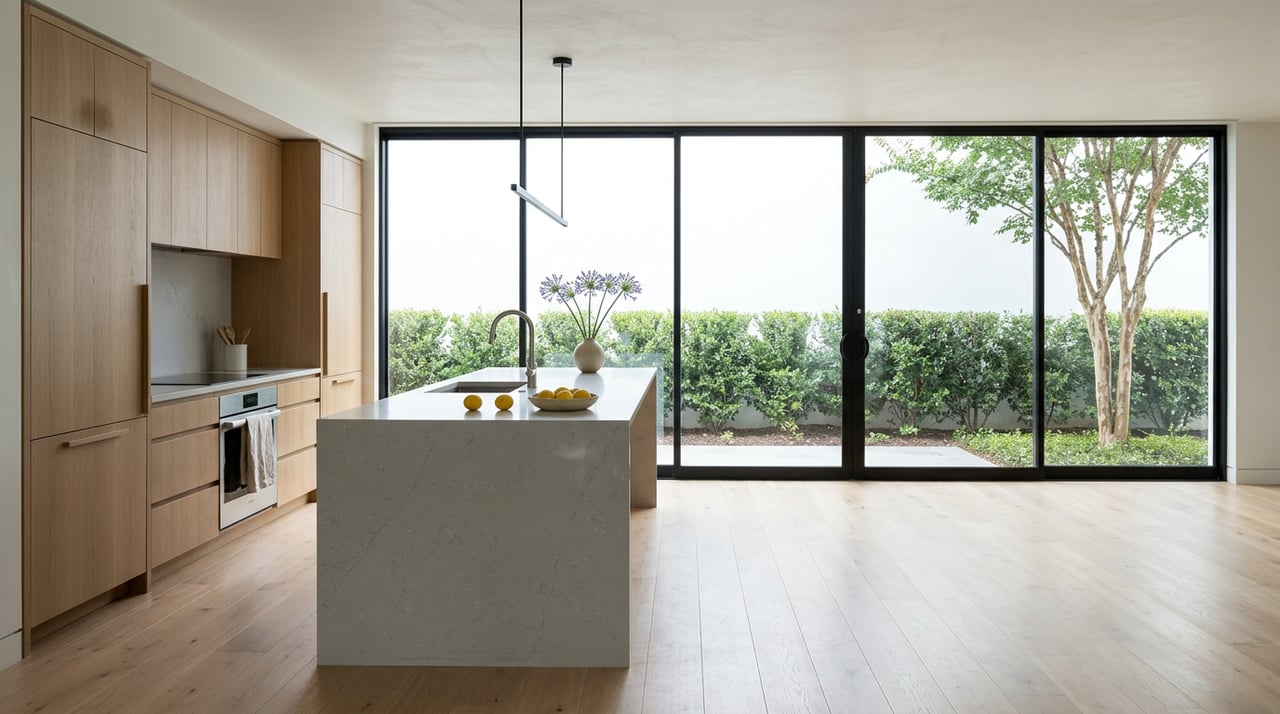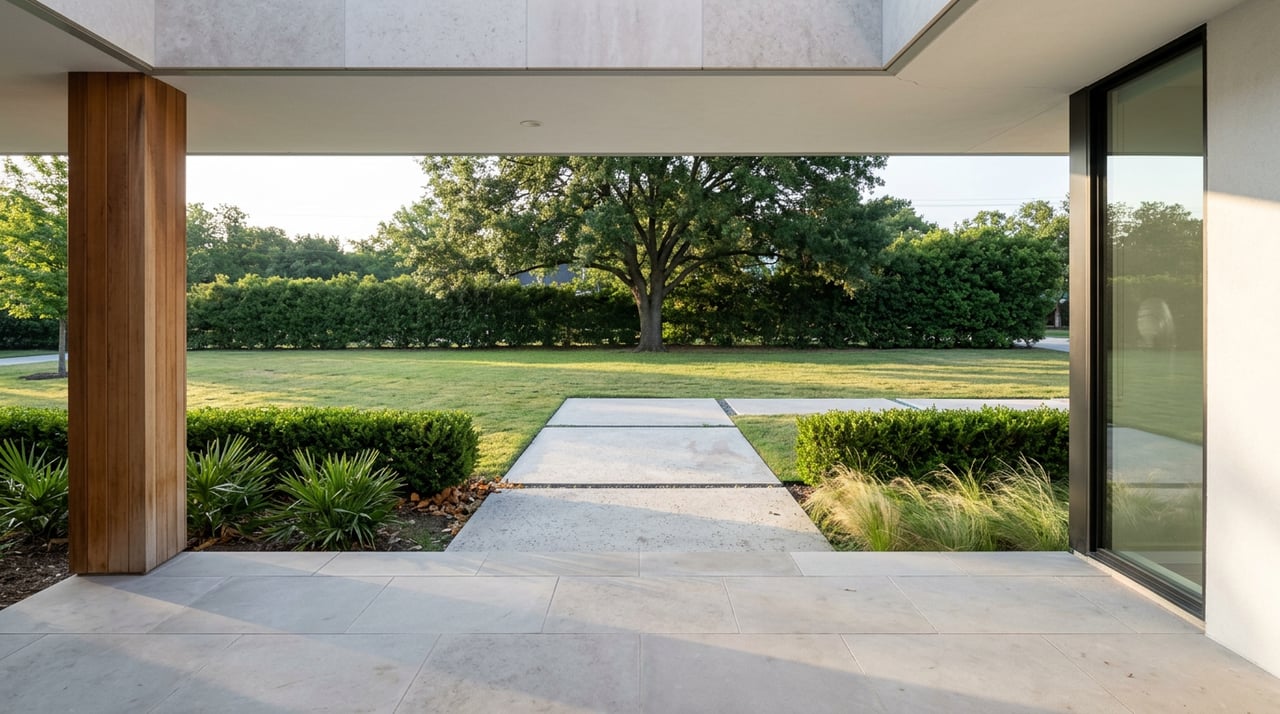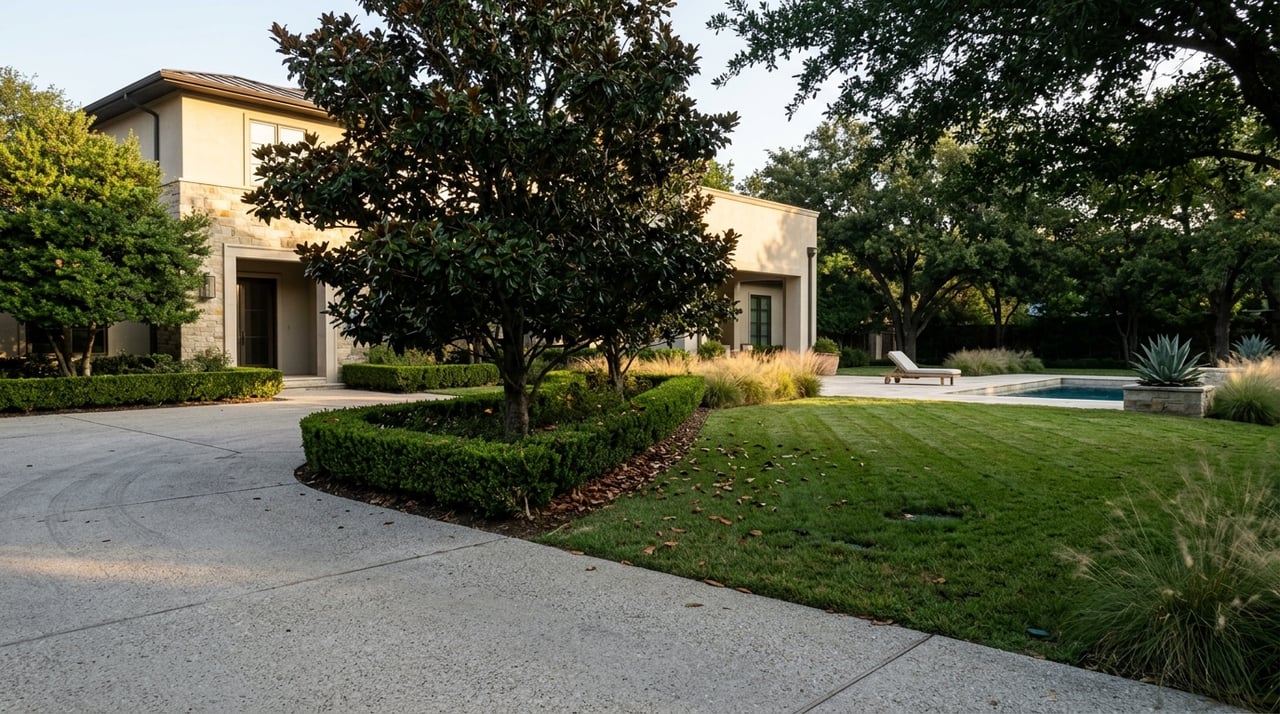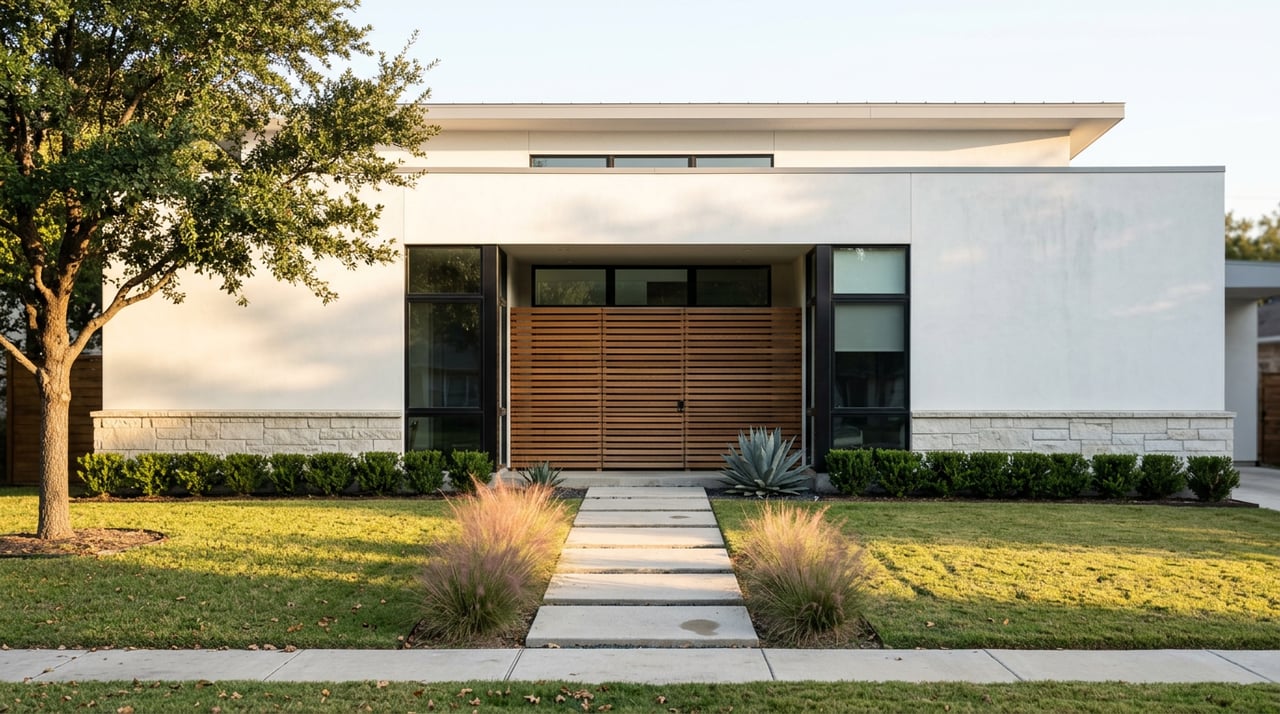
Two houses sit four doors apart on the same Bellaire street. Both are listed near $1.2 million. One is a 1962 ranch with hardwood floors and a kitchen that hasn't been touched since the Reagan administration. The other is a spec home finishing framing this month, full of the wide-plank oak and quartz that Houston builders now consider table stakes. A buyer comparing these two listings against the neighborhood's median price is comparing apples to a parking space. The house is worth something because of its square footage and finishes. The lot next door is worth something because of its dirt. The median doesn't separate the two, and that's the mistake that costs Bellaire buyers real money at the negotiating table.
Bellaire's median price gets quoted constantly, but it's a blended figure drawn from a market selling two fundamentally different products under one address format. Understanding which product you're actually looking at, before you write an offer, is the single most useful thing a buyer or seller in this city can do.
The Number Hiding Inside Every HCAD Record
Every property in Harris County carries a public appraisal record through the Harris Central Appraisal District, and that record splits value into two lines: land and improvement. Most buyers skip past this split and go straight to the total. That's the error.
Consider a Bellaire property where the HCAD record shows land value at $460,000 against a modest total. That split tells you the market sees the dirt as the asset, not the structure sitting on it. Builders active in the area treat anything where land represents more than roughly 65 to 70 percent of the HCAD total as a strong teardown candidate, especially if the structure flooded during Harvey or Imelda.
Flip the ratio and the story changes. Take a property where HCAD shows a $900,000 total, split evenly at $450,000 land and $450,000 improvement. That even split means the existing structure still carries real appraised weight, likely because it was built with better materials, has been maintained, or was elevated after a flood event. In that scenario, renovating and keeping the existing footprint can make financial sense in a way it doesn't for the neighbor's teardown-ready lot.
This ratio matters because Bellaire's lots themselves aren't uniform commodities. A typical interior lot runs 7,500 to 8,750 square feet, with some mid-block lots reaching 9,000 to 10,000 square feet. Vacant and teardown-ready parcels have been listing in the $399,000 to $579,000 range for lots in that size band through the middle of 2026. That's the floor value every structure on that lot is being measured against, whether the seller has run that math or not.
Why the Portals Can't Agree on One Number
If you've shopped Bellaire on more than one site, you've probably noticed the median price moves depending on where you look. One tracker showed a median sale price near $1.3 million over the three months ending April 2026, up modestly year over year, with days on market stretching to about 30 compared to 20 the year before. A separate home-value index, current as of mid-2026, put the average closer to $997,000. A third source, drawing on HAR data, put the median appraised value just above $1,000,000 with a median sold price around $318 per square foot.
None of these numbers is wrong. They're measuring different slices of the same market. A trailing sales median only counts homes that actually closed in that window, and if a run of finished new construction sold at $1.8 million while a batch of original ranches sold at $750,000, the median swings hard depending on which group closed more units that particular month. A value index that includes every home, whether it's listed or not, smooths that volatility but also dilutes it with untouched original homes that haven't been touched by the teardown wave at all. A list-price snapshot captures whatever happens to be sitting active on a given day, which skews toward whichever product type builders and sellers chose to bring to market that quarter.
The practical takeaway isn't to pick a favorite number. It's to stop treating any single median as a stand-in for what your specific property, or the specific property you're bidding on, is actually worth. Ask which subset of the market that number came from before you anchor to it.
What a Teardown Actually Costs, Line by Line
Builder conversations in Bellaire's 77401 market put finished new construction at $1.6 million to $2.4 million depending on size and finish level, with hard construction costs running $250 to $400 per square foot. A 4,000-square-foot build lands between $1,000,000 and $1,600,000 in construction costs alone, before land, financing, and soft costs are added. Add a $400,000 to $550,000 lot and the all-in figure before builder profit sits between roughly $1.4 million and $2.1 million.
Renovation runs a different ledger. A full gut renovation in the Houston market runs $100 to $215 per square foot. On a 2,200-square-foot Bellaire ranch, that's $220,000 to $473,000. The math only works when the total of purchase price plus renovation stays comfortably under what a renovated home can actually sell for on that block, since the neighborhood ceiling is set by comparable new construction, not by however much a seller spent.
| Path | Typical cost | What sets the ceiling |
|---|---|---|
| Full gut renovation, 2,200 sq ft | $220,000 to $473,000 | Nearby new construction sale prices |
| Teardown and custom rebuild, 4,000 sq ft | $1.4M to $2.1M all-in before profit | Builder finish level and lot premium |
| Finished new construction, ready to move in | $1.6M to $2.4M | Size, lot, and finish package |
Active builders in Bellaire permits include names like Lovett Homes, CSC Luxury Homes, Kem Homes, and RedBrick Builders, alongside firms such as On Point Custom Homes that list Bellaire among their primary service areas next to Tanglewood and West University. Their pricing sets the practical ceiling that renovation dollars are competing against.
The Floor Elevation Rule That Changes the Math After a Flood
Bellaire sits along Brays Bayou, and the city's post-Harvey flood ordinance does real work in pushing properties toward the teardown side of the ledger. The city requires new construction and substantial improvements in flood hazard areas to elevate the lowest floor to at least one foot above the 500-year floodplain elevation, a standard stricter than the baseline used elsewhere in Houston, according to the City of Bellaire's floodplain development page.
The trigger that matters most for buyers eyeing an older home is the substantial improvement rule. If the cost of repairing or improving a structure equals or exceeds 50 percent of the structure's pre-damage market value, the whole project has to meet current floodplain construction standards, including the elevation requirement. More than 60 Bellaire homes were deemed substantially damaged after Harvey alone. Once a structure carries that designation, its improvement value on the HCAD record tends to sit permanently lower, which mechanically pushes the land-to-improvement ratio toward teardown territory even if the house itself looks fine from the street.
Before making an offer on anything built before the mid-2000s, it's worth checking whether the FEMA flood zone designation on the parcel is Zone AE, the high-risk designation carrying a federally backed mortgage insurance requirement, or Zone X, the lower-risk category. The FEMA flood map service center lets you pull that designation directly.
Reading Your Own Address Before You Bid
None of this requires hiring anyone to start. Pull the parcel record through the Harris Central Appraisal District's public search, note the land and improvement split, and run the ratio yourself. Cross-check the FEMA flood zone. Ask a Bellaire-based agent for the flood permit history on the specific address, since that record can reveal whether the structure has been elevated or carries a substantial damage flag from a prior storm. Those three data points, more than any median price pulled off a portal, tell you whether you're bidding on a house or bidding on dirt with a building attached.
Bellaire rewards buyers and sellers who do this homework before the offer stage, not after. A seller who understands their property sits firmly on the land-value side of the ledger can price accordingly and set expectations with buyers up front. A buyer who runs the ratio before touring can walk into a showing already knowing whether they're negotiating over finishes or negotiating over square footage of dirt.
If you're weighing a purchase or sale in Bellaire and want a second set of eyes on what a specific HCAD record is actually telling you, The LaRose Kaileh Group works this market street by street. Request a Private Consultation and we'll walk through the numbers on your address before you make a move either way.